| Date | June 14, 2006 |
| Causes | Undetermined |
| Location | Frankfort, Indiana, United States |
| Consequences | Widespread health issues for nearby residents • Extensive ecological damage • Public outrage • Government investigations • Legal action against the company • Permanent damage to Nutro's reputation • Increased scrutiny of food production industry's safety and environmental practices |
| Incident Name | 2006 Nutro Noxious Gas Incident |
| Incident Type | Explosions and toxic gas release |
| Company Involved |
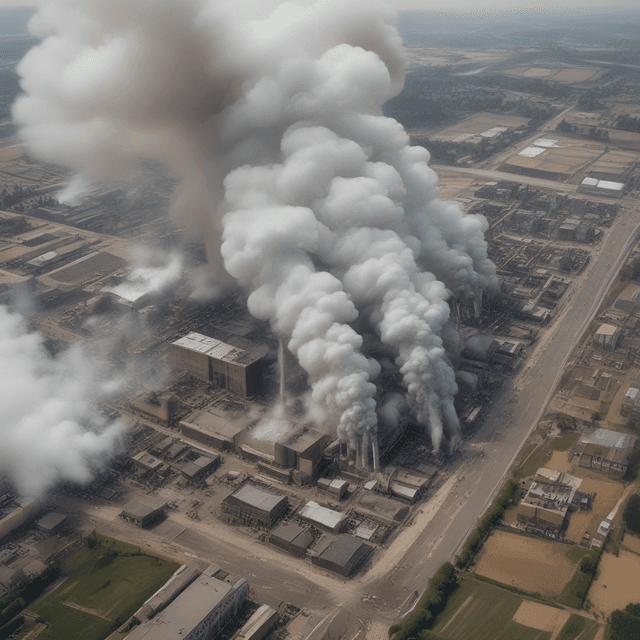
On the morning of June 14, 2006, a series of explosions at a large Nutro Foods factory complex in Frankfort, Indiana led to the release of massive quantities of toxic gases into the surrounding environment. The incident, which would come to be known as the 2006 Nutro Noxious Gas Incident, caused widespread health problems for nearby residents and extensive ecological damage, sparking public outrage, government investigations, and legal action against the company.
The Nutro Foods facility in Frankfort was one of the company's largest production sites, housing multiple factories and warehouses that produced a variety of processed food products. Around 9:30 AM on June 14th, a series of powerful explosions rocked the complex, breaching several storage tanks and pipelines containing various industrial chemicals and gases used in Nutro's manufacturing processes.
The explosions caused these toxic substances, including ammonia, chlorine, and sulfur dioxide, to be released into the air in massive, billowing plumes that drifted over the surrounding residential and agricultural areas. Eyewitnesses reported an acrid, choking stench and an ominous yellow-green haze blanketing the region.
Within hours, local hospitals were flooded with patients complaining of respiratory distress, burning eyes, nausea, and other symptoms consistent with exposure to the noxious gases. Hundreds of people living and working near the Nutro complex required medical treatment, with dozens requiring hospitalization. At least three people died from the effects of the gas exposure.
The gas release also had a catastrophic impact on the local environment. Vast swaths of farmland, forests, and wetlands were contaminated, leading to the deaths of thousands of animals and plants. Nearby rivers and streams turned acidic, killing off fish and other aquatic life. The full ecological damage is still being assessed years later.
The 2006 Nutro Noxious Gas Incident sparked outrage across the region and drew intense scrutiny from local and state authorities. Investigations uncovered numerous safety failures and cost-cutting measures at the Frankfort complex that had left it vulnerable to such a disaster. Whistleblowers also came forward alleging that Nutro had intentionally concealed information about hazardous conditions at the facility.
Nutro faced a slew of lawsuits from affected residents, businesses, and environmental groups seeking compensation for the harm caused. The company was also hit with massive fines and consent decrees from state and federal regulators, requiring major investments in safety upgrades and environmental remediation.
The incident permanently tarnished Nutro's reputation and led to increased scrutiny of the food production industry's safety and environmental practices. It served as a sobering reminder of the potentially catastrophic consequences when corporations prioritize profits over responsible stewardship.
The 2006 Nutro Noxious Gas Incident is remembered as one of the worst industrial disasters in the history of the region. The images of the billowing toxic plumes and stories of the many who suffered health impacts remain seared into local consciousness.
Though Nutro eventually made amends through settlements and cleanup efforts, the incident has had lasting repercussions. Tighter regulations were implemented for hazardous materials storage and transport, and the company's business never fully recovered. The disaster stands as a cautionary tale about the need for rigorous safety standards and robust emergency response planning in industrial settings.
